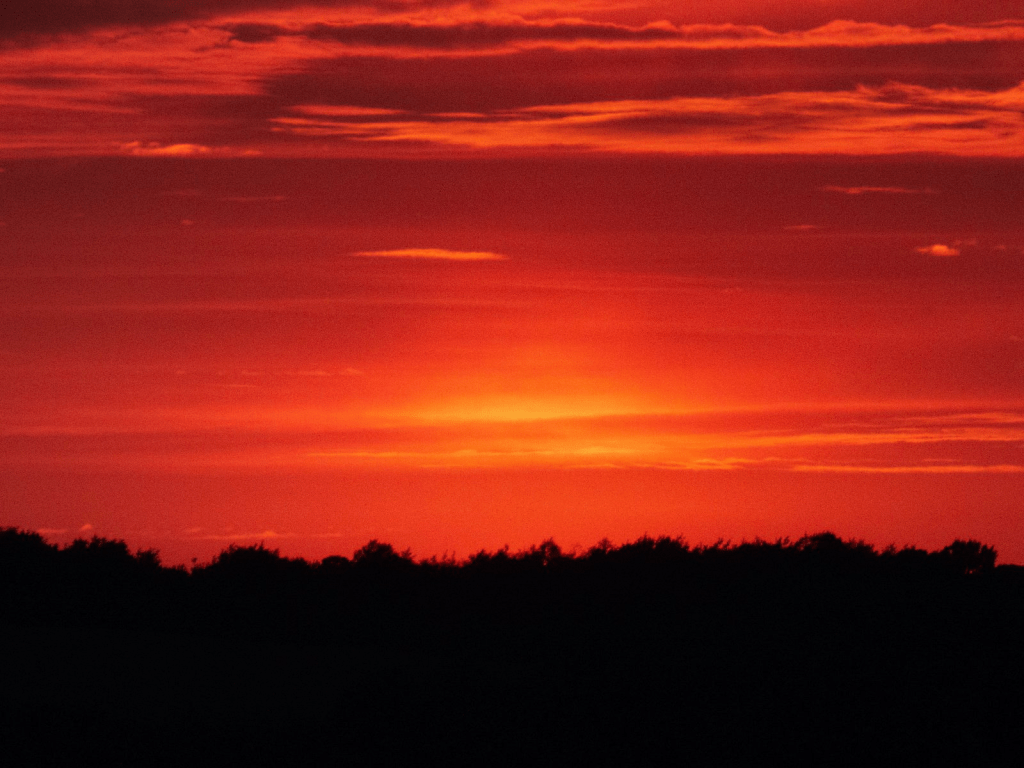
“The sky is definitely red!” Another spoke, “That’s impossible, the sky has always been blue and my teacher said it was true.” If we overheard a couple of kindergartners speaking to one another about the color of the sky, we wouldn’t be surprised to hear them disagree. We all agree that the sky is blue, don’t we? Well, that is, until the sky isn’t blue. We hear truth until we hear a more accurate version of the truth.
So, it is with the skies in the first sentence of our Bibles. Genesis 1:1 states, “In the beginning, God created the heavens and the earth.” (ESV) We all agree that the Bible was written in English, right? Just making sure. Now that we agree on this indisputable fact we can move quickly through this post. It’s very easy to see that God created heaven and God created the earth. Wait a second, there’s a kindergartner whispering in my ear… Oh! I see. Uhhhmm, well let’s work this out. It appears that heaven is not the word used in Genesis 1:1. Instead, there’s the letter s attached to the end of it.
How many times have people read the 10 words of Genesis 1:1 and failed to recognize the truth of those words? Genesis 1:1 has often been read as if the life after death location – heaven, is what God created in the beginning. Not only that, how could anyone not see that the earth was created as well? Is it true that God created the third planet from the sun as well as everything on it and everything surrounding it? Yes. I would agree with that truth. The Bible says that all things were created by Jesus (Colossians 1:16). Yet, heaven is not a physical locale is it? We may be getting ahead of ourselves. Let’s slow down and even put the conversation in reverse. There aren’t ten original words in Genesis 1:1. There are only 7 and they are Hebrew words, not English.
בְּרֵאשִׁית בָּרָא אֱלֹהִים אֵת הַשָּׁמַיִם וְאֵת הָאָרֶץ (Bereshit bara Elohim et hashamayim v’et ha’aretz). These are the original words: Bereshit (In the beginning) bara (created) Elohim (God) et (and) hashamayim (skies) v’et (and) ha’aretz (land). The Hebrew words et and v’et are in the original Masoretic Text (a text with margins) and these point to direct objects, the land being the second direct object. First, remembering that Hebrew is read from right to left we see 7 words above.
Beginning with the word skies which is translated heavens, the word heavens is correct yet not clearly distinguished for English readers. Genesis 1:8 states that God called the expanse Heaven. Heaven is the same word as heavens in Genesis 1:1. We’re getting closer to the truth about the sky. If you noticed, the English translation calls an expanse Heaven. The expanse is raquia רָקִיעַ or a solid dome beaten out to keep the waters above it in check. So, pausing for a moment, what are we talking about? Obviously, this description is not of a disembodied location. The raquia is the the dome above the sky. How do we know? Genesis continues to speak.
Genesis 1:9, And God said, “Let the waters under the heavens (hashamayim) be gathered together into one place, and let the dry land appear.” And it was so. Also,Genesis 1:14–18, [14] “And God said, “Let there be lights in the expanse of the heavens to separate the day from the night. And let them be for signs and for seasons, and for days and years, [15] and let them be lights in the expanse of the heavens to give light upon the earth.” And it was so. [16] And God made the two great lights—the greater light to rule the day and the lesser light to rule the night—and the stars. [17] And God set them in the expanse of the heavens to give light on the earth, [18] to rule over the day and over the night, and to separate the light from the darkness. And God saw that it was good.” How can these lights exist in a disembodied non-physical world? They simply don’t. We need to reorient our minds around the Biblical definitions of the heavens, and the earth.
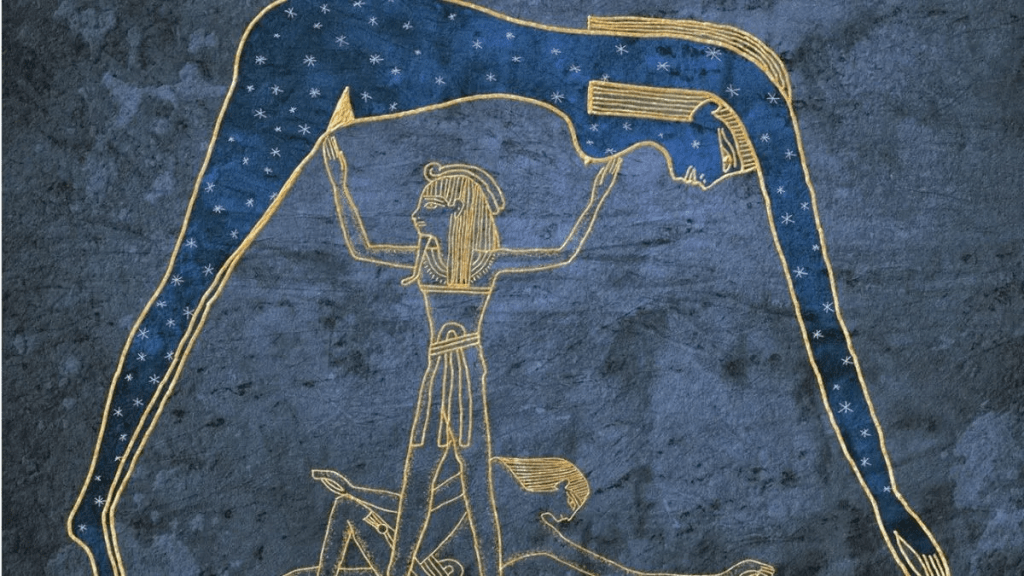
Genesis appears to be providing meaning to things we take for granted like the skies, the seas, the dry land, the stars, sun and moon. Genesis is attributing all things in creation to one true God whereas contemporary cultures definitely had polytheistic explanations for creation. Egypt’s sky goddess, Nut, is depicted as forming the heavens.
This is just a taste of hearing the truth. The margins of our Bibles need a lot of expanding in order to begin grasping and processing the meanings or truth intended by the authors of the Bible. [More on the heavens and the earth to come]
 My Bible Margins
Leave a comment